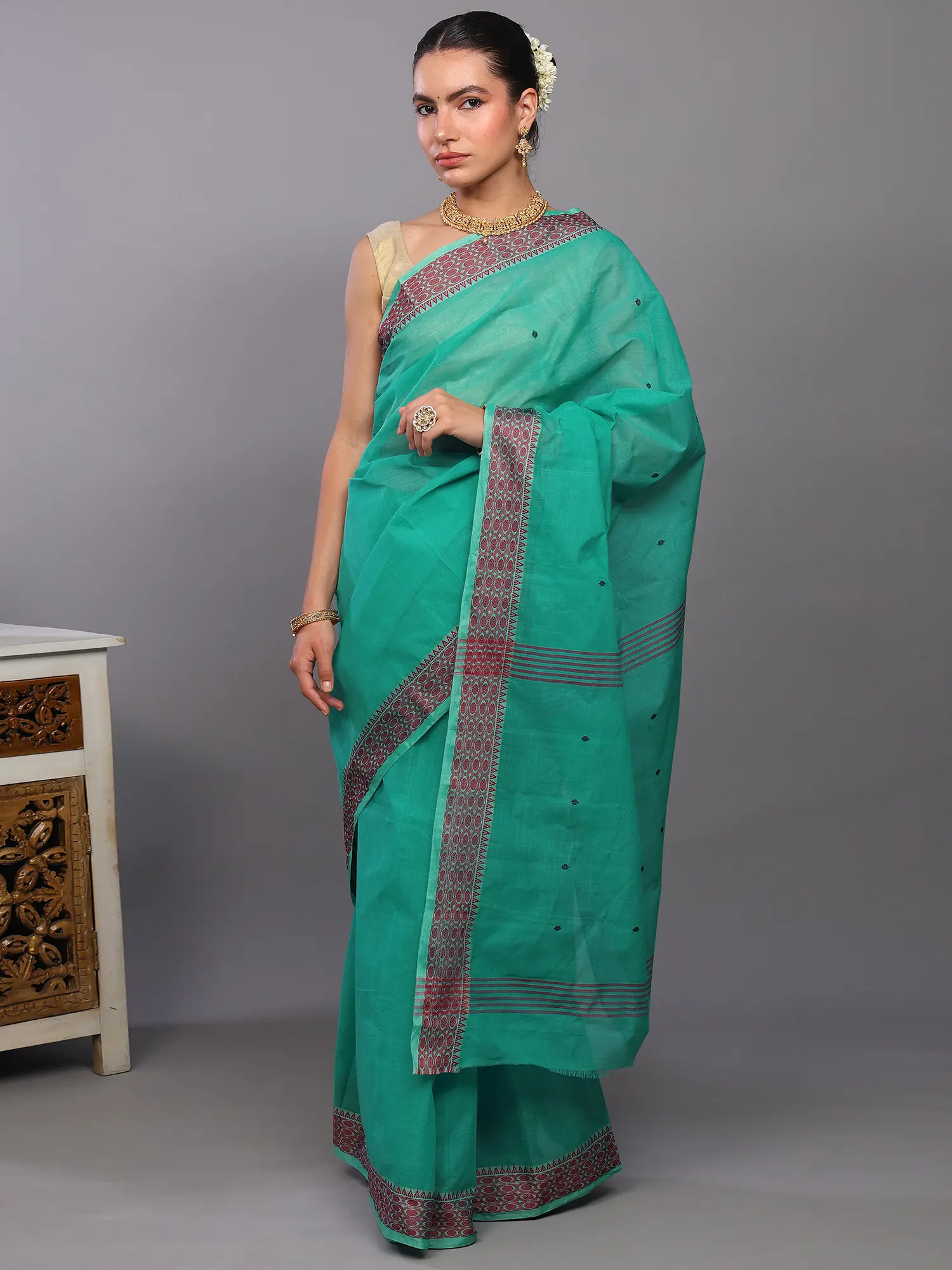
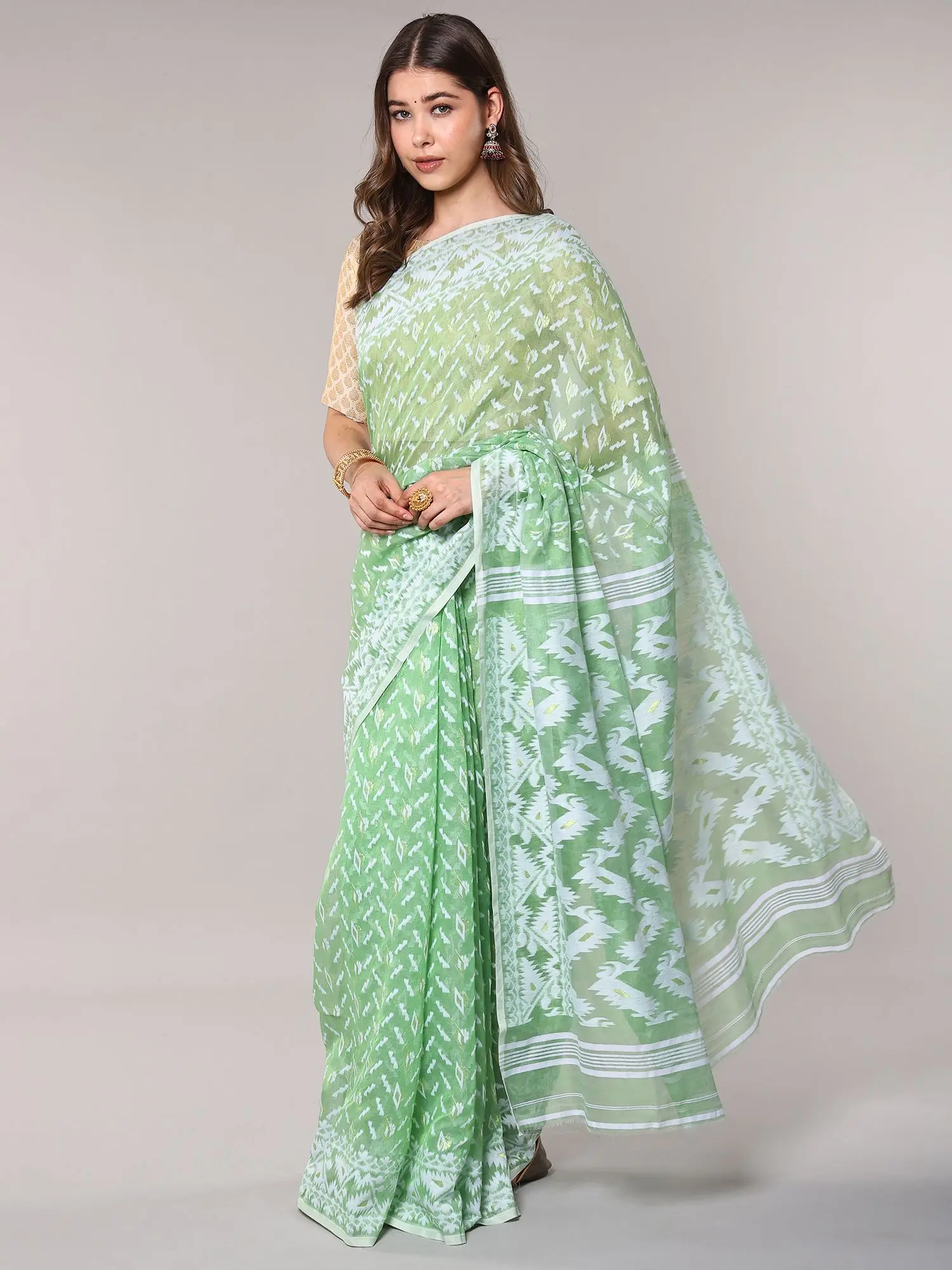
Electric-Green Cotton Temple Border Saree with Woven Bootis and Stripes Pallu
Machine or hand-wash cold, inside out. Air-dry in shade. Iron on medium heat. Wash with similar colours the first time.
Description
There is a particular confidence in a colour that announces itself without apology, and electric green, worn in cotton, is precisely that. This saree belongs to the quiet tradition of temple-border weaving, where the border is not merely an edge but a procession of geometric motifs drawn from the vocabulary of gopuram friezes and ritual textiles. Scattered across the body, small woven bootis punctuate the field with a rhythm that feels both devotional and everyday. The stripes pallu carries the weight of the design forward, its woven structure lending a textural depth that printed cloth simply cannot replicate. Cotton of this character breathes generously through a south Indian afternoon and grows more characterful with every wash. It is the kind of fabric that rewards regular wearing rather than occasional ceremony. Pair it with a deep ivory or raw-gold cotton blouse to let the green speak fully. For a more contemporary register, a terracotta or rust blouse draws out the warmth latent in the electric tone and grounds the whole drape with understated elegance.
Complete your look
Hand-picked pieces that sing gently with this one.


Behind this piece
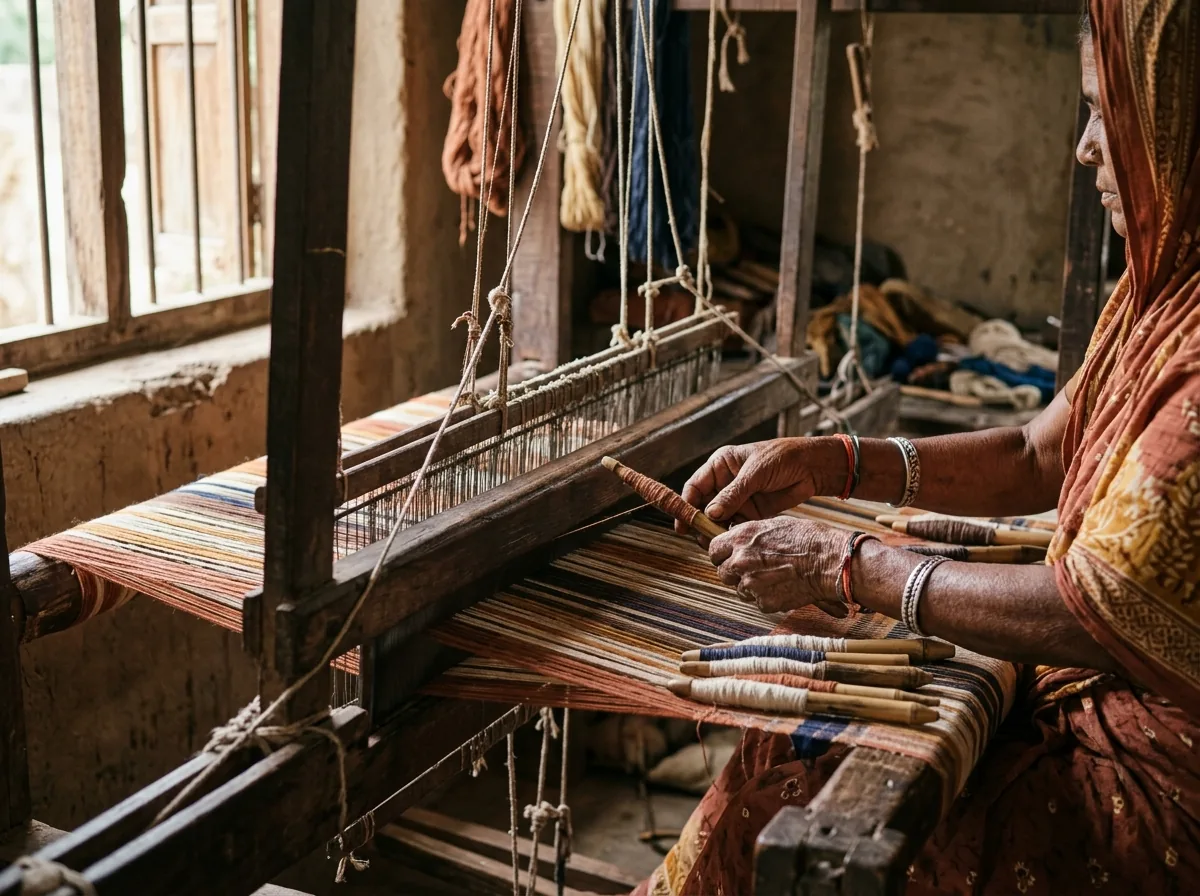
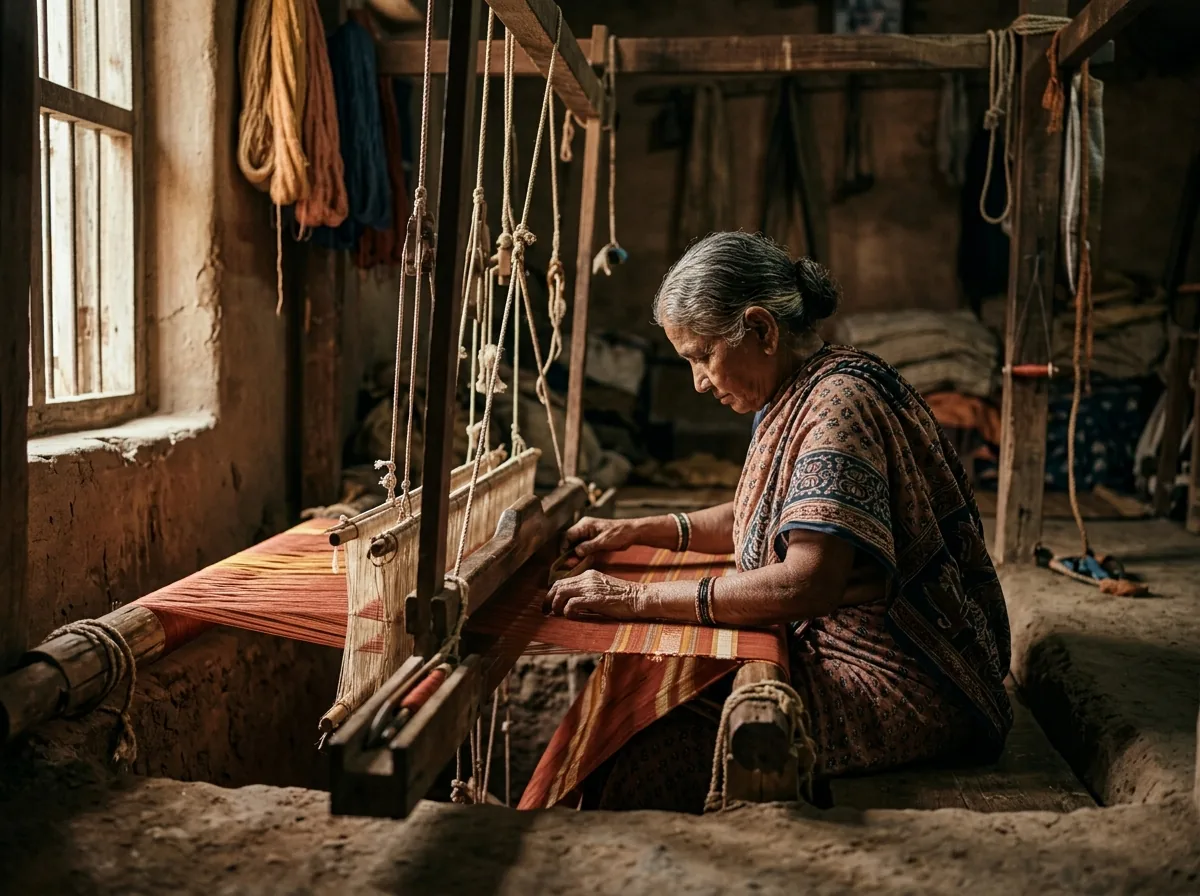
The temple border is one of India's oldest saree grammar, its repeating arch motifs tracing a lineage back to the sacred thresholds of Dravidian mandapams. Woven in fine cotton, this saree speaks the language of South Indian handloom tradition, where the border is not decoration but architecture. The electric green ground is a contemporary choice layered over an ancient form, while the scattered bootis and the striped pallu carry the quiet authority of weavers who have held this vocabulary for generations. Cotton here is not a humble fibre; it is the original canvas of ceremonial dress.
How to style
For a morning puja or a temple visit, drape this saree in the Madisar style and pair it with oxidised silver temple jewellery, heavy jhumkas and a Kondapalli bead necklace. For a literary festival or heritage cultural event, style it with a contrast-coloured sleeveless blouse in off-white silk, raw-sole kolhapuri chappals and a single gold bangle. For a casual lunch with considered dressing, wear it with a tucked-in cotton kurta blouse in ivory, block-printed potli bag and flat kolam-printed juttis. The electric green anchors every pairing without demanding excess.
Fabric & care
Hand wash this cotton saree separately in cold water with a mild, pH-neutral detergent. Avoid soaking for longer than five minutes to preserve the woven booti structure and prevent colour bleed from the vivid green ground. Do not wring; press out water gently and dry flat in shade to retain the pallu's stripe clarity. Iron on a medium cotton setting while slightly damp. Store loosely folded in a breathable muslin cloth, away from synthetic fabrics. With mindful care, a well-constructed cotton saree of this kind will soften and improve gracefully across many seasons.
More from sarees


 Sale
Sale
Reviews
No reviews yet — be the first to share your thoughts.
From the Journal
Stories about the craft, the loom, and the wearing of a piece like this one.