A thousand running stitches, and the cloth remembers everything.
The Cloth That Women Made from Waiting
There is a particular kind of patience that belongs to the women of rural Bengal. Not the passive patience of resignation, but the active, breathing patience of someone who is making something while she waits. Kantha, at its oldest, was exactly this: a textile born not from looms or workshops or merchant commissions, but from the quiet hours of a household, and from the conviction that nothing should be wasted.
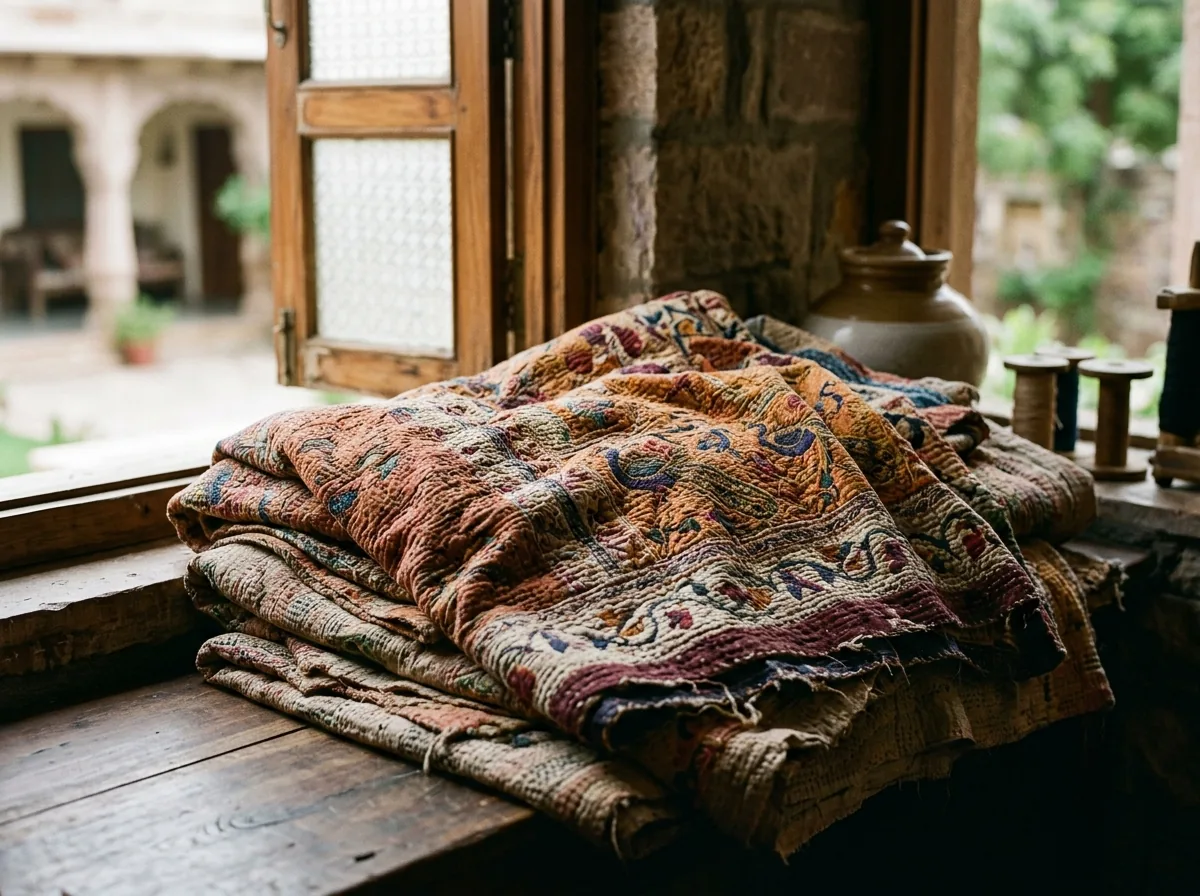
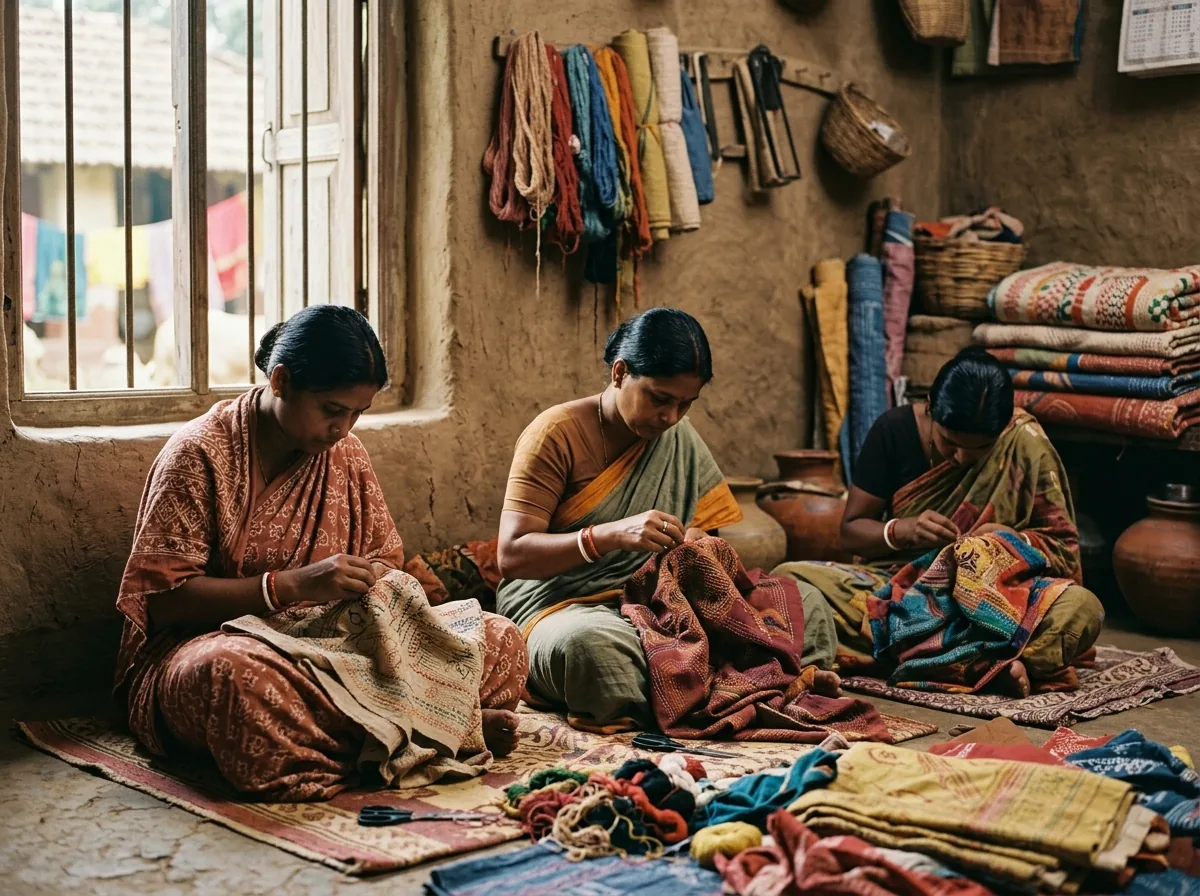
The word kantha is rooted in the Sanskrit kanthaa, meaning rags or old cloth. But the name does not do justice to what the object becomes. Women in the districts of Murshidabad, Rajshahi, Faridpur, and Jessore, many of those latter districts now across the border in Bangladesh, would collect the softest worn saris from their own wardrobes and those of their mothers. They would layer these lengths of cotton, stitch them together with thread drawn from the borders of those very same saris, and in doing so, transform exhaustion into tenderness.
The result was a quilt, yes. But it was also a record. It held within it the weight and colour of every garment that had reached the end of its first life and been given a second. A faded blue border here, the ghost of a red weave there, all held together by rows of running stitch so close and even that the cloth would gather into a characteristic soft ripple, a texture that is entirely kantha's own.
This was not craft in the decorative sense. It was domestic necessity elevated, through patience and a refined visual instinct, into something closer to art.
The Grammar of the Running Stitch
To understand kantha is to understand the running stitch, which is the simplest stitch there is, and also, in the right hands, the most quietly powerful. A needle enters the cloth, travels a small distance below the surface, and emerges again. Repeated ten thousand times across a surface, it creates movement, dimension, and warmth. In kantha, this stitch is everything.
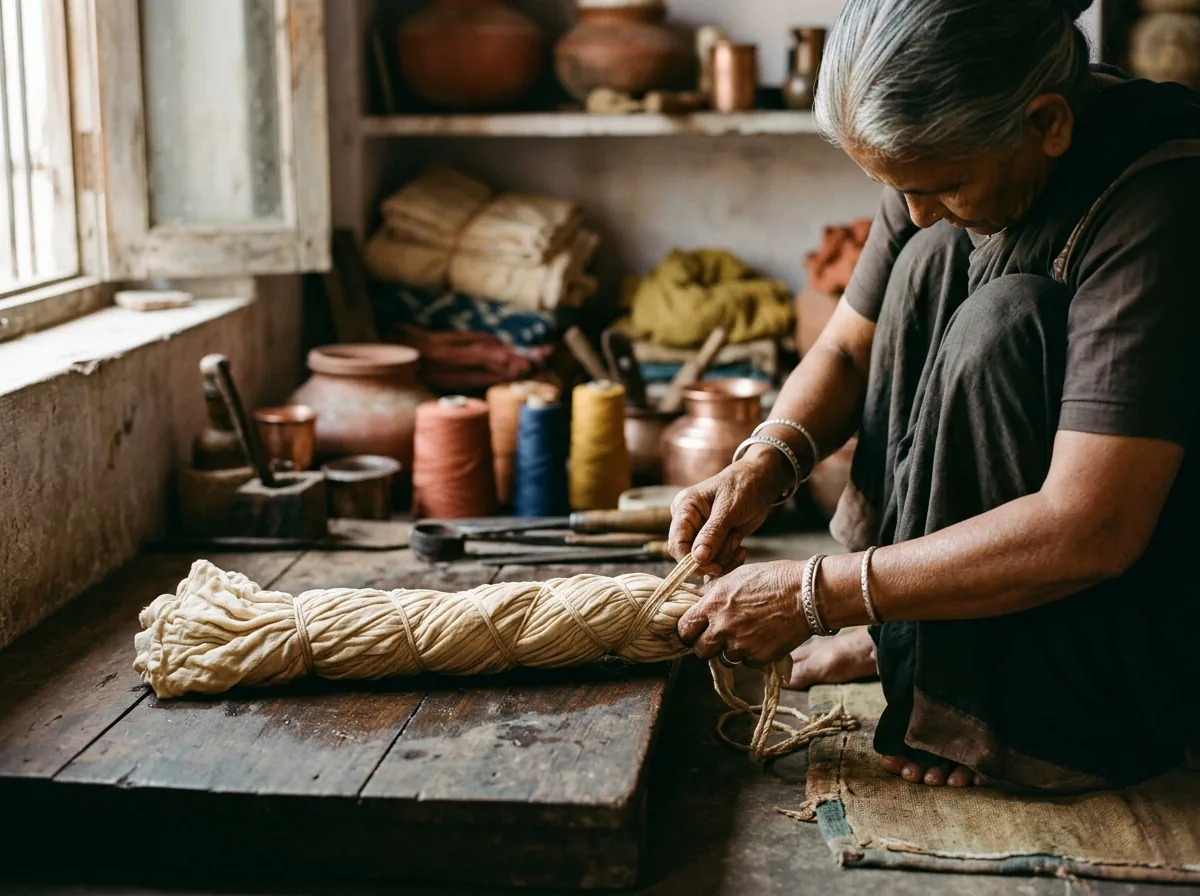
Women working in the kantha tradition used no embroidery hoops, no transfer patterns, no printed guides. They held the layered cloth in their laps, reading the weave of the cotton beneath their fingers the way a reader reads a page. The stitches followed an internal geometry, one learned not from instruction manuals but from watching mothers and grandmothers work, from correcting one's own errors, from years of simply doing.
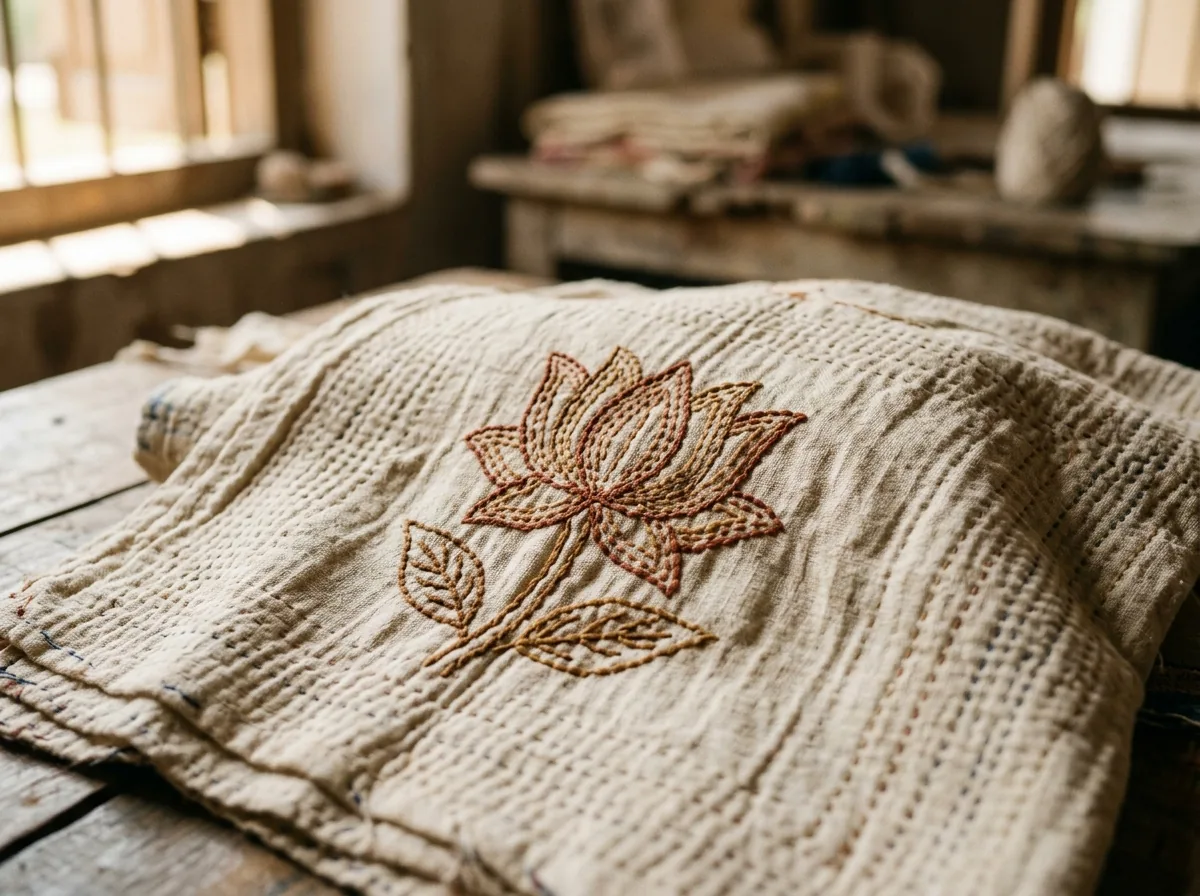
The filling stitch, called bharat in some regional dialects, covered large areas of a motif in parallel lines of running stitch, giving the embroidery its characteristic density. The outline stitch defined the edges of a lotus, a fish, a deity, a boat. And the background itself was never left untouched. Even the ground cloth was stitched over, row by row, in a technique so thorough that it transformed the base fabric into a kind of woven memory, compact and warm.
The motifs themselves form a rich visual lexicon. The lotus, the tree of life, the conch shell, the sun, the elephant procession, the river scene, the figure of Lakshmi, the palanquin: all appear again and again across the kantha tradition, but never identically. Each woman brought to the shared vocabulary her own spacing, her own hierarchy of colour, her own small departures. No two kanthas are the same, and that is precisely the point.
Geography of a Living Craft
Kantha is not a single tradition but a family of traditions, each shaped by the district and community that produced it. The older forms, from Murshidabad and Birbhum in West Bengal, tend towards softer colours and more spacious compositions. The white ground cloth shows through generously between motifs, giving these pieces a luminous restraint. Thread was often repurposed from the red and white borders of cotton saris, which is why early kanthas have a palette that feels both humble and precise.
From the Rajshahi region, before partition separated that world from itself, came kanthas known for their exceptional fineness of stitch and their elaborate central medallions, the lep kantha made for warmth and the sujani kantha made for ceremony. The sujani tradition in the Bhagalpur and Darbhanga districts of Bihar is a related cousin, carrying many of the same visual inheritances across a slightly different cultural soil.
In Murshidabad today, craft organisations and self-help groups work with women in villages such as Berhampore and its surrounding areas to sustain the nakshi kantha form, the pictorial kantha that tells stories from the Ramayana, from folk tales, from the daily choreography of rural life. These groups have provided both a market and a language for valuing work that was, for generations, made and given away within families, never sold, never counted as labour at all.
The kantha revival of the twentieth century, supported in part by institutions in Kolkata and by the work of researchers who documented what remained in private collections, helped bring this embroidery back to a wider consciousness. But the craft never truly left the villages. It persisted, as domestic things do, quietly.
What the Motifs Hold
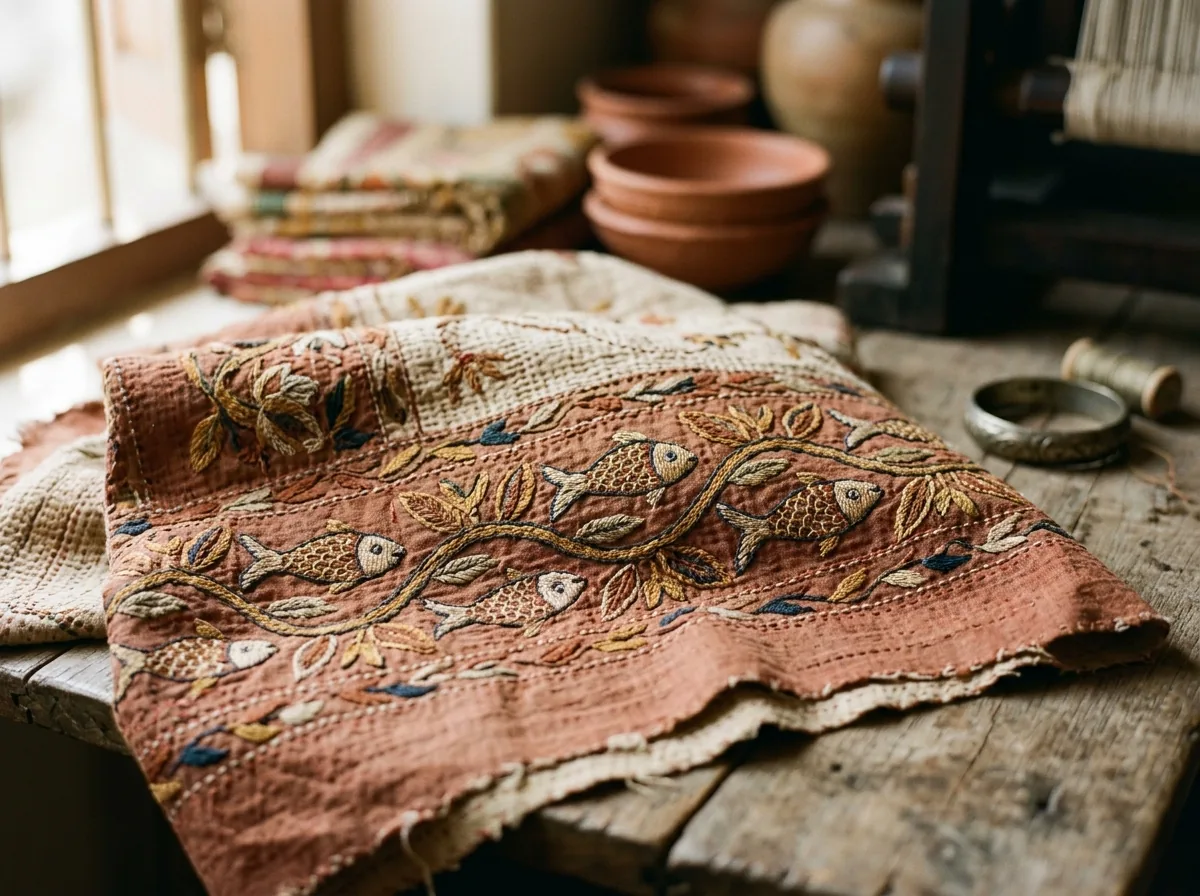
Every image in a kantha carries a weight that goes beyond decoration. The fish, maach, is an auspicious symbol across Bengal, associated with fertility, abundance, and the river-world that has always defined the landscape here. A kantha given as a wedding gift would almost certainly contain fish, worked into the border or swimming through the field of the cloth in pairs. The lotus appears in its many forms, open and closed, sometimes with a goddess seated at its centre, sometimes alone, rising from stitched water.
The tree of life, the kalpa vriksha, appears in kanthas from across the tradition and connects this embroidery to a far older visual language shared with the Mughal-era textile arts, with the embroideries of Gujarat and Rajasthan, with the carved temple pillars of Odisha. The border of a fine kantha often contains a continuous vine pattern that echoes the creeper borders of Dhaka muslin or the floral repeats of a Banarasi weave. These are not coincidences. They are the marks of a subcontinent in conversation with itself across centuries.
What is particular to kantha, and what makes it moving in a way that is difficult to articulate, is the sense that these motifs were chosen personally. A woman stitching a kantha for her daughter's marriage was not executing a pattern. She was composing a blessing, selecting from the available vocabulary of her tradition the images that felt most necessary, most true, most protective. The cloth was a letter written in thread, intended for one person, made to last a lifetime.
Kantha in the Contemporary Wardrobe
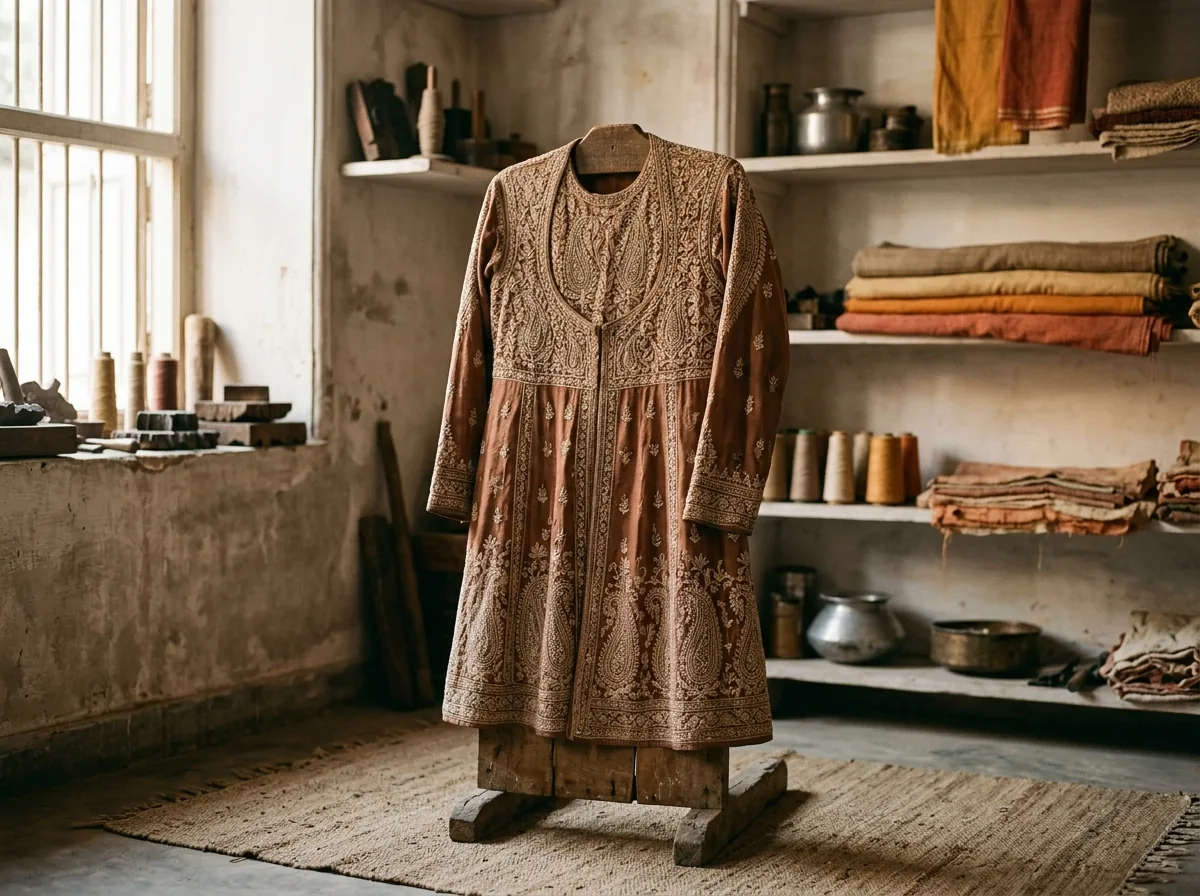
The visual language of kantha has travelled far from the layered quilts of rural Bengal. Today it appears on silk sarees from Murshidabad, on cotton kurtas from Kolkata's design studios, on stoles, on jacket linings, on the cuffs of blouses made for women who want to carry something of this history with them without making a performance of it.
The finest contemporary kantha work still comes from the hands of women working within the tradition, in the districts around Bolpur and Shantiniketan, in the villages near Berhampore, and in the community cooperatives that have grown up around the craft in both West Bengal and Bangladesh. Shantiniketan, with its long connection to craft revival through Tagore's vision of a self-sufficient, artistically alive rural Bengal, remains one of the most significant centres for kantha as a living practice rather than a museum artefact.
When kantha appears on a garment today, the most considered versions are those that allow the embroidery its own authority. A single panel of dense kantha work on the pallu of a Murshidabad silk saree, worked in colours that recall the original repurposed thread palette of cream, red, and indigo, does not need embellishment. The stitch itself is the statement, and it is a statement that carries several hundred years of female patience and female artistry within it.
The discerning shopper who chooses such a piece is not simply buying embroidery. She is acknowledging the continuum of a practice, the unbroken thread between the woman who stitched a quilt in a village in Birbhum a century ago and the woman who bends over a frame in a cooperative workshop today, making something that will last.
The Cloth Continues
There is something quietly radical about a craft that began as the recycling of worn cloth and became one of the most recognised embroidery traditions in South Asia. Kantha did not begin in a royal atelier. It began in ordinary homes, made by women whose names were not recorded, working with what they had, making beauty from the remnants of daily life.
That origin has never left it. The best kantha work still carries a certain domestic warmth, a human scale, a sense of having been made for someone specific rather than for a market. It resists the coldness of mass production not by being precious, but by being personal. Each running stitch is a small, deliberate act, and the accumulation of those acts across a length of cloth is, finally, the only definition of craft that matters.