

Temple jewellery began as adornment for deities in South Indian temples. Goldsmiths in Nagercoil, Thanjavur and Kumbakonam cast Lakshmi, Ganesha, peacocks and mango motifs in heavy relief, and the same moulds later dressed Bharatanatyam dancers on stage.
How to recognise it
Look for a raised deity or paisley motif, a slightly matte antique finish, and ruby or emerald coloured stones set in a bed of gold. Nothing about it is delicate, and that is the point: these pieces were made to read from a distance.
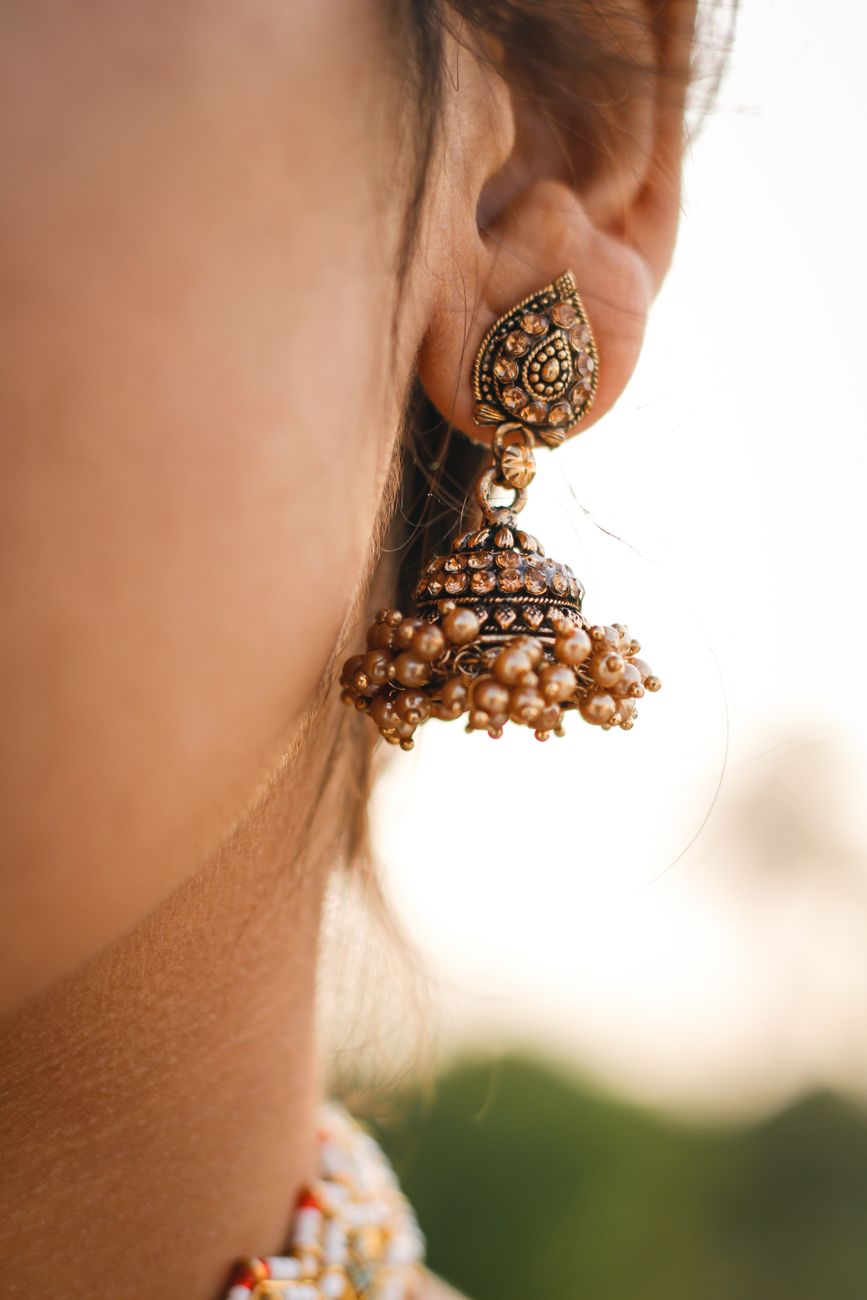
Handcrafted Indian jewellery from the Exotic India studio
What to buy first
A pair of temple jhumka earrings is the easiest entry. From there, a lakshmi coin pendant or a short temple haram carries the look into a saree without taking over.
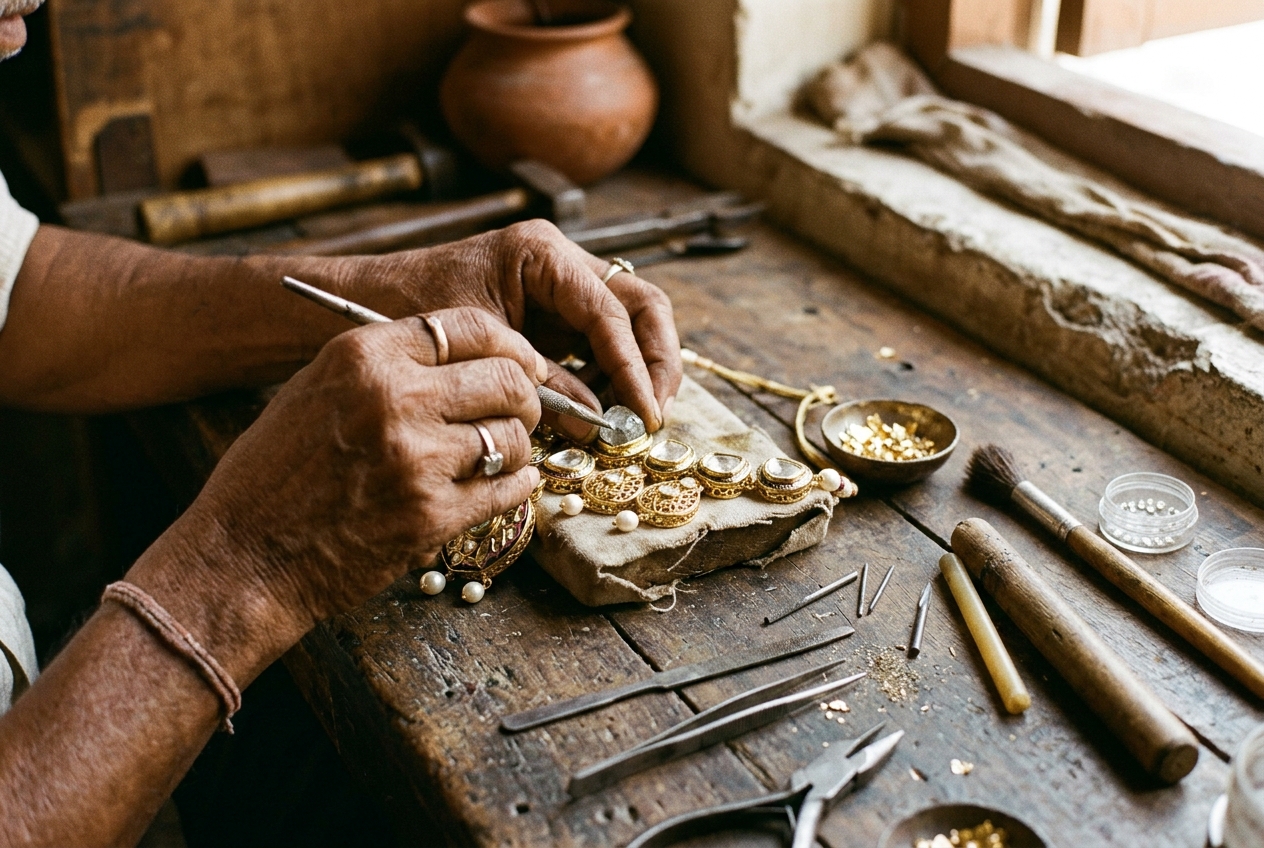
A karigar at work on a piece for Exotic India
Wearing it now
Temple pieces sit beautifully with plain silk, linen and cotton. Keep the rest of the look quiet: one strong temple piece, small studs, and nothing competing at the wrist.